
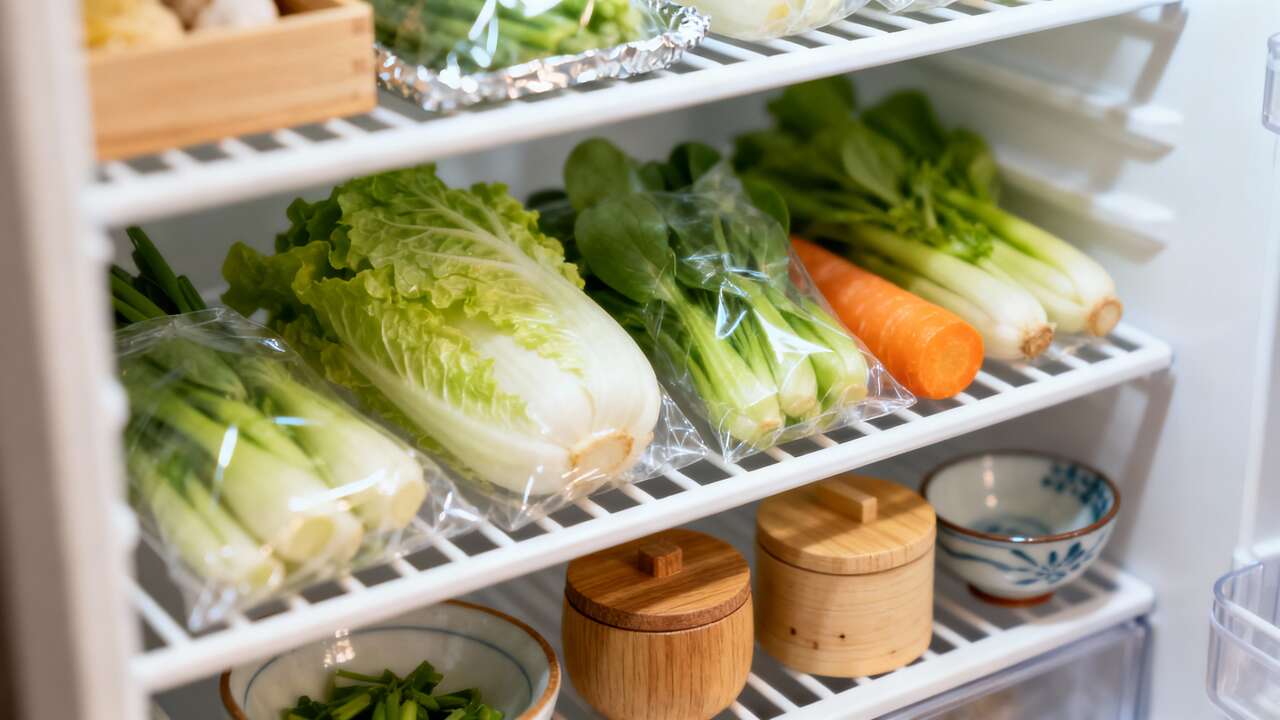

In kitchens across the country, a familiar battle is waged daily inside the refrigerator. Crisp lettuce turns to a sad, wilted mess, and fresh herbs become a slimy disappointment in a matter of days. The common culprits in this fight for freshness are often plastic wrap and aluminium foil, single-use products that, while convenient, contribute to a growing environmental problem and frequently fail to preserve our produce effectively. Yet, an elegant and time-honoured solution from Japan offers a way to extend the life of vegetables, reduce waste, and eliminate the need for disposable wraps. This method, rooted in a deep respect for food, is remarkably simple and could fundamentally change how we store our fresh goods.
The art of preserving vegetables: a Japanese tradition
A culture of freshness
Japanese cuisine places an immense value on the quality and freshness of ingredients. From the crispness of a cucumber in sunomono to the vibrant green of edamame, the integrity of the vegetable is paramount. This culinary philosophy has, over centuries, fostered ingenious techniques for preserving produce at its peak. Long before the advent of modern refrigeration and plastic packaging, methods were developed to maintain the delicate balance of moisture and texture. The practice of wrapping vegetables in damp cloths is not merely a modern “life hack” but a continuation of a long-standing tradition born from a necessity to make the most of seasonal harvests and to present food in its most perfect state. It is an approach that treats ingredients with reverence, ensuring nothing is lost to spoilage.
Beyond the kitchen: a holistic approach
This preservation technique is a small window into a broader cultural perspective on the relationship between nature, food, and daily life. It reflects a mindset where resources are managed thoughtfully and waste is minimised at every turn. The use of natural, reusable materials like cotton or linen cloths instead of disposable plastics is a testament to a sustainable ethos that has been practised for generations. This art of preservation is therefore not just about food science; it is an expression of a lifestyle that values simplicity, efficiency, and harmony with the environment. Understanding this cultural context is key to appreciating why this method is not just effective, but also deeply meaningful.
This deep-seated respect for resources and aversion to waste is encapsulated in a powerful cultural concept that governs many aspects of Japanese life, from the kitchen to the wider economy.
The mottainai principles to avoid waste
Understanding the concept of mottainai
The Japanese term mottainai is a powerful expression that conveys a sense of regret concerning waste. It is more than just “what a waste”; it embodies the idea that every object and resource has intrinsic value and should be used to its fullest potential. The concept is rooted in Buddhist philosophy, which respects all living things and the resources that sustain them. In a modern context, mottainai has become a rallying cry for environmental consciousness, often summarised by the “3 Rs”: reduce, reuse, and recycle. However, it also includes a fourth R: respect. This principle encourages a mindful appreciation for the labour, energy, and natural resources that go into producing the items we use, especially our food.
Mottainai in the kitchen
Applying mottainai in the kitchen transforms daily chores into mindful practices. It is about using every part of the vegetable, from root to stem, finding creative uses for leftovers, and, crucially, preventing food from spoiling in the first place. The cloth-wrapping method is a perfect embodiment of this principle. By investing a small amount of effort to properly store vegetables, one honours the food and the resources it took to grow it. This simple act directly combats food waste, which is a significant economic and environmental issue. Embracing mottainai means shifting from a disposable mindset to one of preservation and circularity. Key applications include:
- Using vegetable scraps to make broth.
- Finding recipes for parts of produce often discarded, like broccoli stems or carrot tops.
- Storing food correctly to maximise its lifespan, preventing premature decay.
- Composting any organic matter that cannot be consumed.
With this philosophy of minimising waste as our guide, let us examine the practical steps of the preservation method itself, a technique that puts the spirit of mottainai into direct action.
The breathable coat: a plastic and foil-free method
The core technique
At its heart, this Japanese method involves creating a protective, breathable environment for vegetables. Unlike plastic wrap, which suffocates produce by trapping moisture and ethylene gas (a ripening agent), a simple cloth allows the vegetables to breathe. The process is straightforward and requires minimal equipment. You begin with a clean cotton cloth, a tea towel, or even a sturdy paper towel. The key is to manage humidity. The cloth acts as a barrier that regulates the moisture level, preventing the two main causes of spoilage: dehydration and excess condensation that leads to rot.
Step-by-step implementation
Successfully preserving your vegetables requires a nuanced approach tailored to the type of produce.
- Preparation: Start with a clean, dry cotton or linen cloth. For leafy greens, herbs, or vegetables prone to wilting like carrots and celery, you will want to slightly dampen the cloth. It should be moist to the touch, but not dripping wet. For produce that is sensitive to excess moisture, such as mushrooms or berries, use a completely dry cloth.
- Wrapping: Lay the cloth flat and place the vegetables on top. Wrap them loosely, ensuring there is still some room for air to circulate. The goal is not to create an airtight seal, but a gentle cocoon.
- Storage: Place the wrapped bundle in the crisper drawer of your refrigerator. For extra protection and organisation, you can place the bundle inside a container, but leave it unsealed or partially open to maintain airflow.
- Maintenance: It is good practice to check on your vegetables every couple of days. If the cloth for your leafy greens has dried out, you can re-dampen it with a light spray of water. If a cloth has become too damp or soiled, replace it with a fresh one.
This simple routine creates a stable microclimate, dramatically extending the freshness of your produce. The scientific principles behind its success are just as elegant as the method itself.
Why does the Japanese method work so well ?
The science of vegetable respiration
Even after being harvested, vegetables are still living organisms. They continue to “breathe” in a process called respiration, taking in oxygen and releasing carbon dioxide, water, and ethylene gas. When vegetables are sealed in a plastic bag, these gases become trapped. The build-up of ethylene accelerates ripening and decay, while the trapped water vapour creates a damp environment perfect for mould and bacteria to thrive. The Japanese cloth method works because it masterfully manages this process. The natural fibres of the cloth are porous, allowing ethylene gas and excess carbon dioxide to escape. At the same time, the cloth maintains a consistent level of humidity around the vegetable, preventing it from drying out and wilting without becoming waterlogged. It strikes the perfect balance between protection and breathability.
A comparative analysis
The difference in longevity between vegetables stored in plastic and those wrapped in cloth is striking. Plastic creates a high-humidity, low-airflow environment that quickly leads to slimy leaves and soft spots. Aluminium foil offers no moisture control and can sometimes react with acidic foods. The cloth method, however, mimics the natural, humid-but-airy conditions in which many vegetables thrive. The results speak for themselves.
| Vegetable | Average Shelf Life (Plastic Bag) | Average Shelf Life (Cloth Method) | Key Benefit |
|---|---|---|---|
| Leafy Greens (e.g., Lettuce, Spinach) | 3-5 days | 7-12 days | Remains crisp and avoids slime |
| Fresh Herbs (e.g., Coriander, Parsley) | 2-4 days | 10-14 days | Prevents wilting and blackening |
| Root Vegetables (e.g., Carrots, Radishes) | 1-2 weeks | 3-4+ weeks | Stays firm and avoids going limp |
| Cruciferous Vegetables (e.g., Broccoli) | 4-6 days | 10-15 days | Prevents yellowing and softening |
The data clearly shows a significant extension in freshness, which translates directly into less food waste and better-tasting meals. To achieve these results consistently, a few daily habits and pieces of knowledge can make all the difference.
Practical tips for preserving vegetables daily
Choosing the right materials and methods
While the concept is simple, optimising it for different types of produce can elevate your results. For the cloth, natural fibres like cotton, linen, or hemp are ideal due to their absorbency and breathability. Keep a dedicated set of “vegetable cloths” in your kitchen. It is also important to remember that not all vegetables are created equal. Group them by their needs: high-humidity lovers like leafy greens and carrots can be wrapped in a damp cloth, while low-humidity items like mushrooms and bell peppers should be wrapped in a dry one to prevent them from becoming slimy.
What not to refrigerate
Equally important is knowing which items should never be stored in the refrigerator in the first place. Cold temperatures can damage the texture and flavour of certain types of produce, or speed up their spoilage. Storing these items correctly at room temperature is just as crucial for reducing waste.
- Potatoes and sweet potatoes: The cold converts their starch to sugar, resulting in a gritty texture and sweet taste when cooked. Store them in a cool, dark, and dry place like a pantry.
- Onions and garlic: They need air circulation and will become mouldy and soft in the fridge. Keep them in a cool, dark place, but separate from potatoes, as the gases they release can cause potatoes to sprout.
- Tomatoes: Refrigeration halts their ripening process and destroys their flavour compounds, leading to a mealy texture. Keep them on the counter.
- Winter squash: Items like butternut and acorn squash are best kept in a cool, dark pantry.
By combining the cloth-wrapping technique for refrigerated items with proper room-temperature storage for others, you create a comprehensive system for food preservation. This holistic approach is the foundation of a more sustainable and mindful kitchen.
Towards an ecological and conscious kitchen
Reducing your environmental footprint
Adopting this Japanese preservation method is a small change with a significant impact. The most immediate benefit is the drastic reduction in single-use plastic and aluminium foil. Every time you reach for a reusable cloth instead of a sheet of plastic wrap, you are making a choice that reduces landfill waste and lessens the demand for fossil-fuel-based products. Furthermore, the fight against food waste is one of the most effective actions an individual can take to combat climate change. Wasted food accounts for a substantial portion of greenhouse gas emissions. By extending the life of your vegetables, you ensure that the water, land, and energy used to grow them were not expended in vain. It is a tangible way to make your kitchen a hub of positive environmental action.
A shift in mindset
Beyond the ecological benefits, this practice fosters a deeper connection with your food. The simple ritual of wrapping your vegetables encourages a moment of mindfulness and appreciation. It transforms food storage from a thoughtless task into a deliberate act of care. This conscious approach often extends to other areas, inspiring more thoughtful meal planning, a greater desire to cook from scratch, and a better understanding of seasonality. It moves us away from a culture of convenience and disposability towards one of intention, sustainability, and respect. Ultimately, it helps build a kitchen that is not only more efficient and less wasteful but also a more joyful and meaningful space.
This simple, cloth-based technique is more than just a clever storage hack. It represents a confluence of ancient wisdom and modern ecological necessity. By embracing the principles of mottainai and the practical steps of this preservation method, we can keep our vegetables fresher for longer, significantly reduce our household waste, and cultivate a more mindful relationship with the food we eat. It is a powerful reminder that sometimes the most effective solutions are not the newest, but those that have been perfected over generations.

- “Trees Adjacent to Fault Lines Reveal Low-Frequency Vibrations Ahead of Seismic Events” - 20 November 2025
- I’ve Recommended It to My Patients for Years”: The Right Way to Wash Your Hair With Vinegar, According to a Dermatologist - 20 November 2025
- Earth’s Seasons Are Out of Sync, Scientists Discover from Space - 20 November 2025
Related publications:
 Veterinarians Warn: The Home Remedy That Eliminates Fleas Effectively
 These Are 6 Products You Don’t Want To Miss From The New M&S X Tom Kerridge Cookware Collection.
 Scientists Find That Boiling Orange Peel Releases Antioxidants That Purify The Air Indoors
 Honda Gold Wing 2025 Official Reveal Proudly Showcases Its Legendary Touring Heritage With Revolutionary Powertrain and Luxurious Comfort Options
 How to Iron Clothes Faster Using a Spray Bottle and a Secret Ingredient
 They’re Building ICBMs With Carbon Fiber”: North Korea Tests 443,000-Pound Engine While America Races
 8 Songs From the 60s and 70s That Make People 60+ Feel 19 Again and Trigger Emotional Nostalgia
 A Simple Roll of Newspaper Is Enough: The Forgotten Method That Carries Your Geraniums Through Winter Without Water, Without Soil… and Without Spending a Penny