
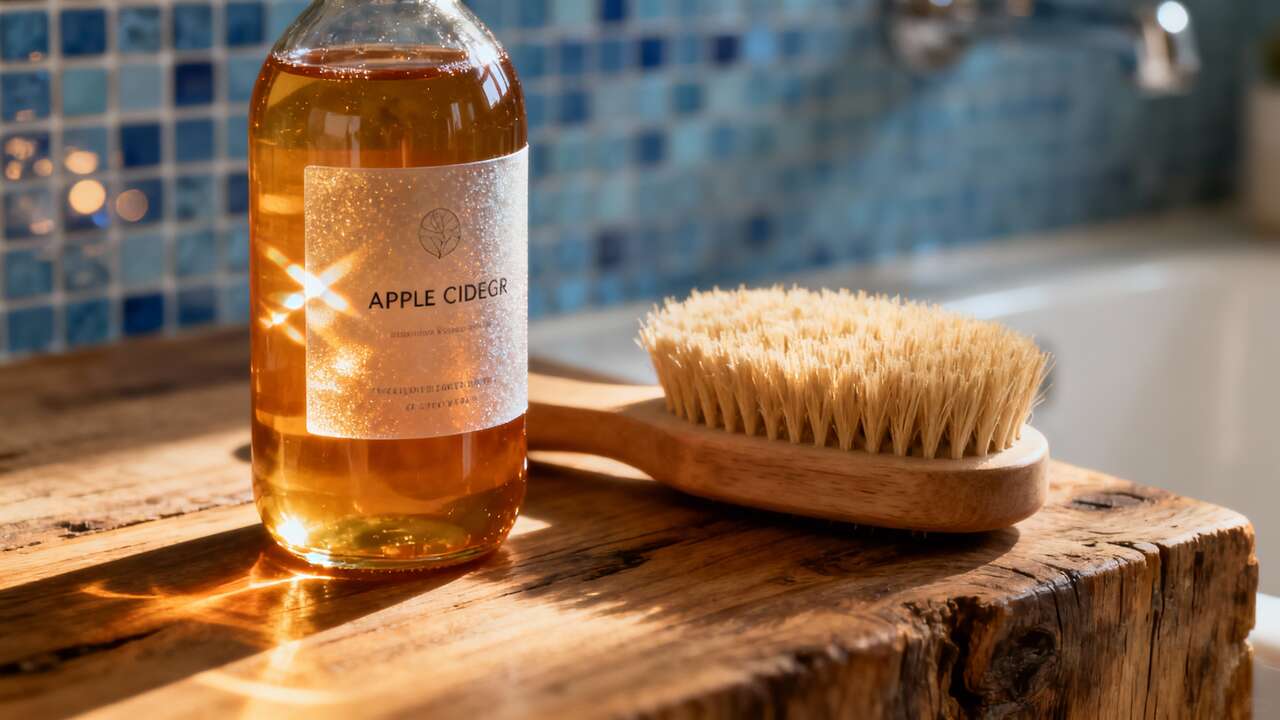

The humble bottle of vinegar, a staple in most kitchen cupboards, has found an unlikely home in the bathroom cabinet. For years, whispers of its hair-transforming properties have circulated, passed down through generations as a trusted home remedy. Now, this age-old secret is being validated by science and endorsed by skin specialists. Dermatologists are increasingly pointing to vinegar, particularly apple cider vinegar, as a simple, effective solution for a host of common hair and scalp issues. From tackling product build-up to restoring natural shine, this acidic rinse is gaining recognition not just as a folk remedy, but as a legitimate step in a healthy hair care routine. But what is the science behind its success, and what is the correct way to incorporate it without causing harm ?
The benefits of vinegar for hair
Restoring the scalp’s natural pH balance
One of the most significant benefits of a vinegar rinse lies in its ability to restore the scalp’s natural pH balance. The skin and scalp have a natural protective layer called the acid mantle, which ideally has a pH of around 4.5 to 5.5. Many commercial shampoos and hair products are alkaline, which can disrupt this delicate balance. An alkaline environment can lead to cuticle swelling, frizz, and a scalp that is more susceptible to fungal and bacterial growth. Because vinegar is acidic, a diluted rinse helps to lower the scalp’s pH back to its optimal level, sealing the hair cuticles and creating a less hospitable environment for dandruff-causing microbes.
Clarifying and removing build-up
Over time, hair can become dull and weighed down by the accumulation of styling products, hard water minerals, and even residue from shampoos and conditioners. Vinegar acts as a natural clarifying agent. Its acetic acid content effectively breaks down and dissolves this stubborn build-up without stripping the hair of its natural oils, unlike some harsh clarifying shampoos. This deep cleanse results in hair that is:
- Noticeably lighter and more voluminous.
- Better able to absorb moisture from conditioners and treatments.
- Visibly shinier and more vibrant.
Regular use can therefore rejuvenate tired-looking hair, restoring its natural lustre and softness.
Enhancing shine and reducing frizz
When the hair cuticle is raised and open, as is often the case after using alkaline products, the hair shaft reflects light poorly, appearing dull and feeling rough. This open cuticle structure also contributes to frizz and tangles. The acidity of vinegar helps to smooth and seal the hair cuticle. A flattened cuticle layer creates a smoother surface that reflects light more effectively, leading to a brilliant shine. It also makes hair easier to detangle, reducing breakage and split ends during combing and styling. Many users report that their hair feels significantly softer and more manageable after just one rinse.
Understanding these benefits naturally leads to a closer examination of what exactly is in vinegar that makes it so effective for our scalp and hair.
Composition of vinegar and its impact on the scalp
The power of acetic acid
The primary active component in any vinegar is acetic acid. This organic compound is responsible for vinegar’s sour taste, pungent smell, and most of its therapeutic properties. For the scalp, acetic acid is a game-changer. It possesses potent antimicrobial, antibacterial, and antifungal properties. This means it can help to control the proliferation of bacteria and yeast, such as Malassezia globosa, which is a common culprit behind dandruff and seborrhoeic dermatitis. By creating an acidic environment, it inhibits the growth of these microorganisms, leading to a cleaner, healthier, and less itchy scalp.
Nutrient profile of apple cider vinegar
While all vinegars contain acetic acid, apple cider vinegar (ACV) stands out due to its richer nutrient profile, derived from the fermented apples it is made from. Unfiltered, raw ACV contains the “mother”, a cloudy substance rich in proteins, enzymes, and beneficial bacteria. It also contains trace amounts of vitamins and minerals. While the concentration of these nutrients is not high enough to “feed” the hair in a traditional sense, they contribute to its overall beneficial effect on the scalp’s microbiome. This complex composition is why it is often recommended over its more sterile counterpart, distilled white vinegar. The combination of its acidity and its raw, fermented nature makes it a holistic treatment for scalp health.
With a clear understanding of its composition and effects, the next logical step is to learn the proper technique for applying it to achieve these results safely.
How to: wash your hair with vinegar
The essential dilution step
The single most important rule when using vinegar on your hair is to never apply it undiluted. Vinegar is a strong acid and can be harsh on the hair and scalp if used at full strength, potentially causing irritation or even damage over time. The universally recommended method is to create a diluted rinse. A good starting point is a ratio of one part vinegar to four parts water. For example, you might mix 50ml of vinegar with 200ml of cool or lukewarm water. It is best to mix this solution in a plastic squeeze bottle or spray bottle for easy and even application in the shower.
The application process
A vinegar rinse should be the final step in your washing routine, performed after shampooing and conditioning. The process is straightforward:
- First, wash and condition your hair as you normally would. Be sure to rinse out the conditioner thoroughly.
- Next, lean your head back and slowly pour or spray the diluted vinegar mixture over your entire scalp and hair, from roots to ends.
- Gently massage the mixture into your scalp for a minute or two to ensure it is evenly distributed and to help loosen any remaining product build-up.
- Let the mixture sit in your hair for a few minutes. Two to five minutes is generally sufficient.
- Finally, rinse your hair thoroughly with cool water. This final cool rinse helps to seal the hair cuticles even further, locking in shine.
Do not worry about the smell; the vinegar scent will dissipate completely as your hair dries.
Now that the correct method has been established, the question of how often one should perform this rinse becomes crucial for maintaining long-term hair health.
Recommended frequency by dermatologists
Finding your personal balance
There is no one-size-fits-all answer for how often to use a vinegar rinse, as the ideal frequency depends on your hair type, scalp condition, and lifestyle. However, dermatologists generally advise a cautious approach, starting with once a week. This is often sufficient to clarify the hair and maintain a healthy scalp pH without overdoing it. For individuals with particularly oily hair or significant product build-up, the frequency might be increased to twice a week. Conversely, those with dry or sensitive scalps may find that a rinse every two weeks is more appropriate. The key is to pay attention to how your hair and scalp respond and adjust accordingly.
Signs of overuse
While beneficial in moderation, overuse of vinegar can have negative consequences. The acidity that makes it so effective can, in excess, lead to dryness and brittleness. Signs that you may be using a vinegar rinse too frequently include:
- Hair that feels overly dry or straw-like.
- Increased scalp dryness or flakiness.
- A noticeable lack of moisture or elasticity in the hair strands.
If you experience any of these symptoms, it is a clear signal to reduce the frequency of your rinses or increase the dilution of your mixture. It is a tool for balance, not a daily treatment.
To ensure the experience remains positive, it is vital to be aware of certain safety measures and potential reactions before you begin.
Precautions to avoid irritation
The importance of a patch test
Before applying a vinegar rinse to your entire head for the first time, it is highly recommended to perform a patch test. This simple precaution can save you from potential widespread irritation or an allergic reaction. To do this, apply a small amount of the diluted vinegar solution to a discreet area of skin, such as behind your ear or on your inner arm. Wait for 24 hours and check for any signs of redness, itching, or irritation. If no reaction occurs, it is generally safe to proceed with the full rinse. This step is particularly important for individuals with known skin sensitivities or conditions like eczema.
Considerations for different hair types
While vinegar rinses are suitable for most hair types, some require special consideration.
- Coloured hair: The acidity of vinegar can, in some cases, cause certain hair dyes to fade more quickly. If you have recently coloured your hair, it is wise to wait a few weeks before trying a rinse or to use a more diluted solution.
- Dry or damaged hair: Those with very dry, porous, or chemically treated hair should use vinegar rinses sparingly. The clarifying properties can sometimes be too stripping for fragile hair. Sticking to a bi-weekly or monthly schedule is often best.
- Sensitive scalp: If you have a sensitive scalp, always start with a highly diluted mixture (e.g., one part vinegar to five or six parts water) to gauge your skin’s tolerance.
Always listen to your body. If you feel any stinging or burning during the rinse, wash it out immediately with plenty of water.
With these precautions in mind, the final decision comes down to selecting the right type of vinegar for the job.
Comparison: white vinegar or apple cider vinegar ?
Key differences in composition and production
The primary distinction between white vinegar and apple cider vinegar lies in their source material and production process. White vinegar is typically derived from grain alcohol and is essentially a solution of acetic acid and water. Apple cider vinegar, on the other hand, is made from fermented apple juice. This means that, in addition to acetic acid, raw, unfiltered ACV contains beneficial compounds from the apples themselves, including enzymes, pectin, trace minerals, and the “mother of vinegar”. This complex matrix of compounds is thought to provide additional benefits for scalp health that white vinegar lacks.
Which is better for your hair ?
For hair care, dermatologists and hair experts almost universally recommend apple cider vinegar over white vinegar. While both can clarify and adjust pH due to their acetic acid content, ACV is considered gentler and more nourishing for the scalp. The additional components in raw ACV may help to soothe the scalp and support a healthy microbiome. White vinegar, being more acidic and starker in its composition, can be harsher and is more likely to cause dryness or irritation. The table below summarises the key points of comparison.
| Feature | Apple Cider Vinegar (Raw, Unfiltered) | White Vinegar (Distilled) |
|---|---|---|
| Source | Fermented apples | Grain alcohol |
| Acidity (pH) | Typically 3.0 – 3.5 | Typically 2.5 – 3.0 (more acidic) |
| Nutrient Content | Contains enzymes, pectin, trace minerals, “mother” | Primarily acetic acid and water |
| Recommended Use | Highly recommended for all hair types | Not generally recommended for hair; better for cleaning |
| Gentleness | Considered gentler on hair and scalp | Can be harsh and stripping |
Ultimately, the choice of raw, unfiltered apple cider vinegar is a safer and more beneficial option for achieving healthy, shiny hair.
Incorporating a diluted apple cider vinegar rinse into a hair care regimen offers a simple, natural, and effective method for restoring balance and vitality. By understanding its benefits, composition, and the correct application method, this traditional remedy can be safely used to clarify the scalp, smooth the hair cuticle, and enhance natural shine. Adhering to recommended frequencies and taking necessary precautions ensures that the experience is both beneficial and free from irritation, making it a worthy addition to modern hair care.

- “Trees Adjacent to Fault Lines Reveal Low-Frequency Vibrations Ahead of Seismic Events” - 20 November 2025
- I’ve Recommended It to My Patients for Years”: The Right Way to Wash Your Hair With Vinegar, According to a Dermatologist - 20 November 2025
- Earth’s Seasons Are Out of Sync, Scientists Discover from Space - 20 November 2025
Related publications:
 “Trees Adjacent to Fault Lines Reveal Low-Frequency Vibrations Ahead of Seismic Events”
 The 10p Trick to Revive a Drooping Peace Lily Instantly
 After 60, This Gentle Activity Outperforms Yoga for Heart and Joint Health
 No Vinegar, No Bicarbonate: The Expert Method That Really Removes Stains From Your Tupperware
 No Plastic Wrap, No Plastic Containers: The Trick to Stop Ham and Cheese from Drying Out Once Opened
 How to Remove Limescale From Your Shower Head Without Vinegar, Scrubbing or Expensive Products
 Scientists Find That Boiling Orange Peel Releases Antioxidants That Purify The Air Indoors
 8 Songs From the 60s and 70s That Make People 60+ Feel 19 Again and Trigger Emotional Nostalgia