
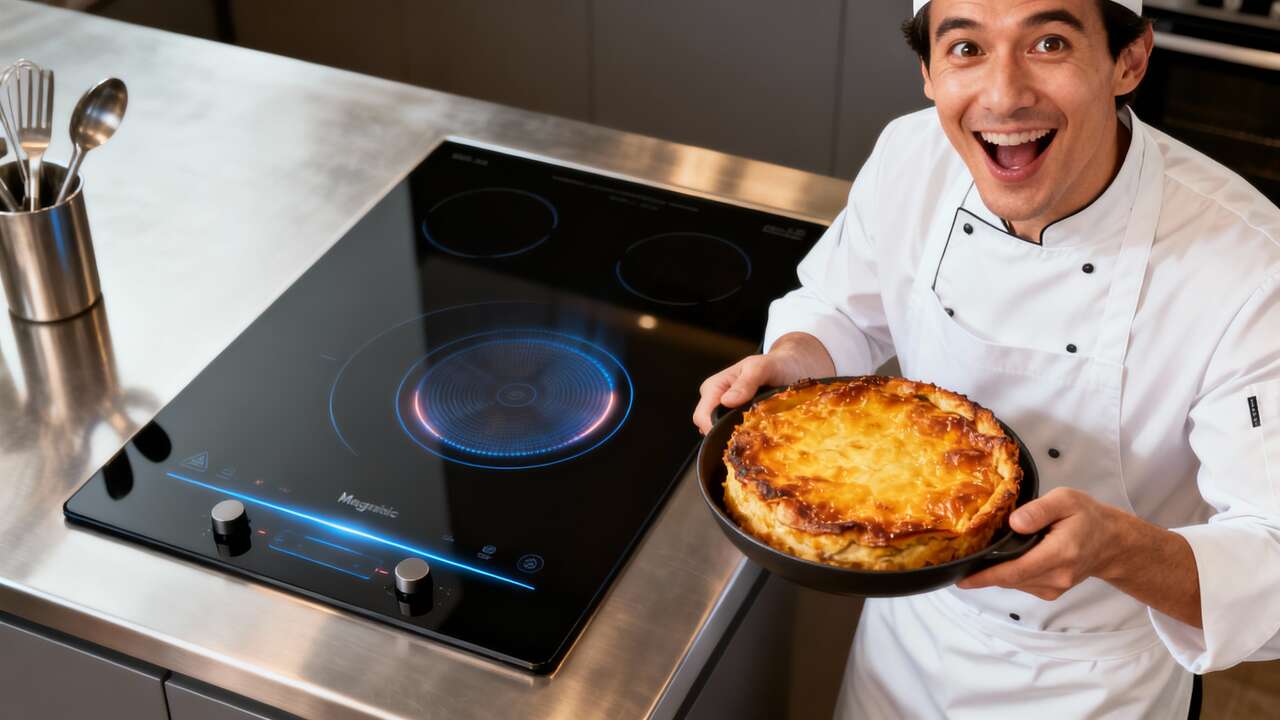

A quiet revolution is simmering in the heart of professional kitchens. Across Europe, and particularly in a test kitchen in London, chefs are setting aside their trusted frying pans in favour of a sleek, black slab that cooks food to perfection without a single drop of oil. This innovative technology harnesses the power of magnetic fields to heat food directly, promising an even cook, no sticking, and a dramatic reduction in fats. The experience is being described as futuristic, akin to cooking in a spaceship, where food glides across a textured surface designed to prevent adhesion. Early demonstrations featuring everything from delicate fish fillets to rustic flatbreads suggest this could be more than a novelty; it could be the future of how we prepare our meals, both in restaurants and at home.
New culinary revolution: magnetic surfaces
A departure from tradition
The culinary world is witnessing a paradigm shift with the introduction of magnetic cooking surfaces. These devices, resembling a modern griddle or a chopping board, are challenging the centuries-old reliance on pans and cooking oils. In controlled tests, a single slab heated to precisely 190°C has been used to prepare a wide array of dishes. Chefs report that the results are consistently impressive, with food achieving a perfect, even browning without the splattering and mess associated with traditional frying. This method represents a fundamental change in cooking dynamics, moving from heating a vessel (the pan) to heating the food itself through a targeted energy field.
The sensory experience
Despite the high-tech nature of the process, the sensory joys of cooking remain intact. A common concern with new cooking technologies is that they might sterilise the experience, removing the familiar sounds and smells that make cooking enjoyable. However, chefs experimenting with these magnetic surfaces note that a tantalising aroma still emanates from the food as it cooks. The sizzle is gentle, and the lack of oil means the true scent of the ingredients comes to the forefront. This combination of advanced functionality and a preserved sensory experience makes the technology particularly appealing to professionals who value both performance and the craft of cooking.
This remarkable innovation is not magic, but rather the application of sophisticated scientific principles. To truly appreciate its potential, it is essential to delve into the mechanics that allow these surfaces to cook so efficiently and cleanly.
Understanding how magnetic surfaces work
The science of magnetic cooking
At its core, this technology is a sophisticated evolution of induction cooking, blended with the principles of contact grilling. A traditional induction hob uses an electromagnetic field to induce an electric current in a pan, which in turn generates heat. These new magnetic surfaces take it a step further. Instead of heating a separate pan, the surface itself generates a precisely controlled magnetic field that interacts directly with the food. This field distributes energy uniformly across the entire cooking area, eliminating the “hot spots” common in conventional pans. The result is an incredibly even and efficient transfer of heat, cooking food from the inside out and the outside in simultaneously.
Key operational components
Several elements work in concert to make these surfaces effective. The primary components include:
- Electromagnetic coils: Positioned beneath the surface, these generate the dynamic magnetic fields responsible for heating.
- A specialised top layer: This is not merely a piece of glass or ceramic. It is a composite material with a unique texture designed to minimise surface tension and prevent food from sticking, even without the lubricating properties of oil.
- Advanced thermal sensors: These sensors provide real-time feedback, allowing the system to maintain a consistent temperature across the slab with unparalleled accuracy.
Comparison with conventional methods
To better understand the leap forward this technology represents, a direct comparison with traditional cooking methods is useful. The table below highlights the key differences in performance and outcome.
| Feature | Magnetic Surface | Gas Hob with Pan | Electric Induction Hob with Pan |
|---|---|---|---|
| Heat Distribution | Perfectly uniform | Prone to hot spots | Generally even, but dependent on pan quality |
| Oil Requirement | None | Essential for most foods | Often required to prevent sticking |
| Cleaning | Simple wipe-down | Requires scrubbing of pan and hob | Wipe-down hob, but pan requires scrubbing |
| Energy Efficiency | Very high (direct heating) | Low (significant heat loss) | High (efficient pan heating) |
The clear advantages in efficiency, health, and convenience demonstrated by this technology explain why it is rapidly gaining traction among culinary professionals.
Why chefs are opting for these new technologies
Pursuit of culinary perfection
For a professional chef, consistency is paramount. The ability of magnetic surfaces to maintain an exact temperature across the entire cooking area ensures that every piece of food is cooked identically. This eliminates the need to constantly move items around a pan to avoid burning some while others remain undercooked. Whether searing a salmon fillet or toasting a flatbread, chefs can rely on a uniform finish every time. This level of control allows for greater precision and frees up the chef to focus on other aspects of meal preparation, confident that the cooking process is perfectly managed.
Health and dietary considerations
The movement towards healthier eating is a significant driver of culinary innovation. By completely eliminating the need for added fats and oils for cooking, these magnetic surfaces cater directly to a health-conscious clientele. Food can be cooked in its own juices, preserving its natural flavours and nutritional value. This is a game-changer for creating light, clean dishes without sacrificing the desirable browning and texture that frying provides. It allows chefs to design menus that are both indulgent and healthy, a combination that is highly sought after by modern diners.
Efficiency in the professional kitchen
A professional kitchen is an environment where speed and efficiency are critical. The rapid heating time and ease of cleaning associated with magnetic surfaces offer substantial benefits. There is no waiting for a heavy pan to come to temperature, and the post-service cleanup is drastically simplified. A single slab can be wiped clean in seconds and be ready for the next dish, a stark contrast to the time spent scrubbing multiple greasy pans. This streamlined workflow can significantly improve a kitchen’s productivity and output during busy periods. Given these benefits, it’s also important to consider the tools that best complement this new way of cooking.
Which utensils to choose for oil-free cooking
Rethinking the chef’s toolkit
The shift to pan-free cooking naturally prompts a re-evaluation of the utensils required. Since there is no pan to scratch or damage, the primary concern shifts to tools that can handle food delicately and withstand the surface temperature without melting or degrading. The absence of oil also means that utensils need good non-stick properties of their own or be designed for gently lifting and turning food. Chefs are finding that materials like high-grade silicone and natural wood are ideal for this purpose.
Essential tools for magnetic surfaces
While an entire collection of pots and pans becomes redundant, a few key utensils are emerging as essential for mastering the magnetic slab. These include:
- Thin, flexible silicone spatulas: Perfect for getting under delicate items like fish fillets or pancakes without breaking them apart.
- Wooden or bamboo turners: These are gentle on both the food and the cooking surface, and they do not conduct heat.
- Long-handled tongs with silicone tips: These provide excellent control for turning vegetables or pieces of meat, ensuring an even cook on all sides while keeping hands safely away from the heat.
The focus is on simplicity and functionality. The goal is to equip the kitchen with a minimal set of versatile tools that work in harmony with the new technology, a principle that reflects the journey of this innovation itself.
From the lab to your kitchen: the evolution of cooking surfaces
An evolutionary leap from induction
This new wave of magnetic cooking surfaces did not appear out of thin air. It is the logical next step in a long line of technological advancements in the kitchen. The journey began with the move from open flames to electric hobs, which offered more control. Then came the introduction of ceramic and halogen cooktops, improving efficiency and aesthetics. The real precursor, however, was the domestic induction hob. Induction technology taught consumers about the power of magnetism in the kitchen, demonstrating faster, safer, and more efficient heating. The current innovation builds directly on that foundation, removing the final intermediary—the pan—to create a more direct and refined cooking process.
Overcoming technical hurdles
Bringing such a concept from a laboratory prototype to a viable kitchen appliance involves overcoming significant challenges. Researchers and engineers had to develop materials that could withstand high temperatures while possessing specific magnetic and textural properties. Creating a system that could generate a stable, uniform magnetic field powerful enough to cook food efficiently was a major hurdle. Furthermore, ensuring the technology is safe, reliable, and intuitive for both professional chefs and home cooks has been a key focus of the development process. The current successful trials in London kitchens indicate that these primary obstacles have been surmounted, paving the way for wider adoption.
As with any groundbreaking technology, it is important to weigh its transformative potential against any practical limitations it may have.
The advantages and limitations of magnetic surfaces in cooking
The compelling benefits
The arguments in favour of adopting magnetic cooking surfaces are strong and multifaceted. The most significant advantage is undoubtedly the ability to cook without oil, leading to healthier meals and cleaner kitchens. The unparalleled temperature control and even heat distribution result in superior and more consistent cooking outcomes. Furthermore, the speed and energy efficiency of the technology can lead to long-term cost savings, particularly in a commercial setting. The space-saving aspect of replacing numerous pans with a single, versatile slab is another major benefit for kitchens where space is at a premium.
Potential challenges and considerations
Despite the numerous advantages, there are potential limitations to consider. The initial cost of this cutting-edge technology is likely to be high, which could be a barrier to entry for both home cooks and smaller restaurants. There may also be a learning curve as chefs adapt their techniques to a pan-less cooking environment. Certain cooking methods that rely on a pan, such as those involving deep-frying or boiling large volumes of liquid, would still require traditional equipment. Finally, the long-term durability and maintenance requirements of these surfaces are yet to be fully established through widespread, prolonged use.
This technology marks a significant milestone in culinary arts. It offers a healthier, more precise, and efficient method of cooking that addresses many of the drawbacks of traditional techniques. By eliminating the need for oil and pans, magnetic surfaces streamline the cooking process, enhance the natural flavour of food, and promise a cleaner kitchen environment. While challenges such as cost and adaptability remain, the fundamental benefits suggest a transformative potential that could redefine cooking standards in both professional and domestic kitchens for years to come.

- “Trees Adjacent to Fault Lines Reveal Low-Frequency Vibrations Ahead of Seismic Events” - 20 November 2025
- I’ve Recommended It to My Patients for Years”: The Right Way to Wash Your Hair With Vinegar, According to a Dermatologist - 20 November 2025
- Earth’s Seasons Are Out of Sync, Scientists Discover from Space - 20 November 2025
Related publications:
 How to Save Money on Heating by Bleeding Radiators Correctly
 Retiring in the Sun: the European Country Offering a Luxurious Lifestyle for Just €750 a Month
 Scientists Find That Boiling Orange Peel Releases Antioxidants That Purify The Air Indoors
 Honda Gold Wing 2025 Official Reveal Proudly Showcases Its Legendary Touring Heritage With Revolutionary Powertrain and Luxurious Comfort Options
 How to Iron Clothes Faster Using a Spray Bottle and a Secret Ingredient
 They’re Building ICBMs With Carbon Fiber”: North Korea Tests 443,000-Pound Engine While America Races
 8 Songs From the 60s and 70s That Make People 60+ Feel 19 Again and Trigger Emotional Nostalgia
 A Simple Roll of Newspaper Is Enough: The Forgotten Method That Carries Your Geraniums Through Winter Without Water, Without Soil… and Without Spending a Penny