
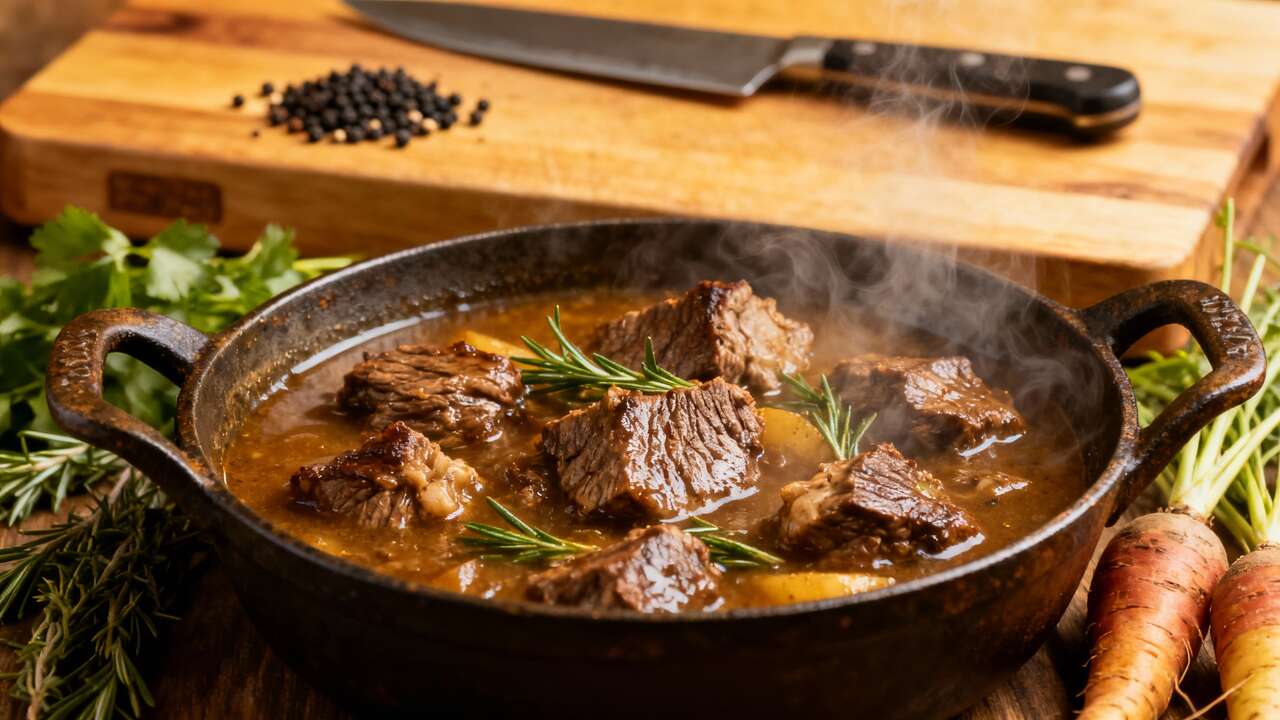

A recent culinary revelation, which gained prominence in late 2025, is transforming the way home cooks approach a timeless classic: the beef stew. For generations, the pursuit of the perfect stew involved complex recipes and long-held family traditions. Yet, according to a growing consensus among chefs and seasoned butchers, the key to a truly sublime dish lies not in a complicated technique, but in the addition of one simple, game-changing ingredient. This single element, often already present in our kitchen cupboards, has the power to tenderise the meat, deepen the flavour, and create a sauce with unparalleled richness, turning a humble meal into a gourmet experience.
The butcher’s secret for a perfect beef bourguignon
The acidic advantage
The secret, as championed by experts from a respected Scottish butchery, is the strategic use of acid. This might sound counterintuitive for a dish celebrated for its deep, savoury richness, but a small amount of an acidic ingredient like red wine or balsamic vinegar works wonders. The acid’s primary role is to break down the tough connective tissues and muscle fibres in the beef. Cuts of meat ideal for stewing, such as chuck or shin, are rich in collagen. While this collagen is responsible for a succulent texture after long, slow cooking, an acidic component accelerates this process, ensuring the meat becomes exceptionally tender and melts in the mouth.
Expert consensus
This is not merely the opinion of a single butcher. Across the culinary world, from celebrated food bloggers to professional kitchens, the principle is gaining widespread recognition. Recommendations that emerged in October and November of 2025 solidified this idea, highlighting how a touch of acidity creates a crucial balance. It cuts through the fattiness of the meat, preventing the dish from becoming overwhelmingly heavy and lending it a subtle brightness. This expert agreement confirms that to elevate a good stew to a great one, balancing the rich, umami notes with a sharp counterpoint is essential.
Choosing your acid
While both red wine and balsamic vinegar are excellent choices, they offer slightly different characteristics to the finished dish. The decision often comes down to the desired flavour profile and the other ingredients being used. Understanding their unique contributions can help you tailor the recipe to your exact preference.
| Ingredient | Flavour Profile | Best For | Notes |
|---|---|---|---|
| Red Wine | Robust, fruity, and complex with tannins. | Classic beef bourguignon and dishes with a deep, traditional flavour. | Choose a dry, full-bodied red like a Merlot or Cabernet Sauvignon. Avoid “cooking wine”, which often contains added salt. |
| Balsamic Vinegar | Sweet, tangy, and slightly syrupy. | Stews where a touch of sweetness is desired, or for a more modern twist. | A little goes a long way. Start with a tablespoon or two, as its flavour is more concentrated than wine’s. |
Now that we understand the secret lies in the acid and have considered the options, it is worth exploring in more detail how this ingredient specifically works its magic to improve the meat’s texture.
How to enhance the texture of your beef stew
The science of tender meat
The transformation of tough beef into a fork-tender delicacy is a matter of chemistry. The key is breaking down collagen, the connective tissue that makes certain cuts of meat chewy if cooked improperly. When heated slowly in a liquid, collagen melts and turns into gelatin, which gives the stew its characteristic silky mouthfeel. An acidic environment, created by adding wine or vinegar, significantly speeds up this process. The acid begins to denature the proteins in the muscle fibres even before the heat fully penetrates, giving the cooking process a head start and ensuring a more consistently tender result.
Low and slow: the perfect partnership
This acidic assistance is most effective when paired with the right cooking method: low and slow. A slow cooker is the ideal vessel for this culinary partnership. By maintaining a gentle, consistent heat over several hours, it allows the acid the time it needs to work thoroughly without rushing the process. If the heat is too high, the muscle fibres can seize up and become tough, counteracting the tenderising effects. The slow cooker, praised for its ease of use and ability to be left unattended, creates the perfect environment for the collagen to dissolve gradually, resulting in meat that is succulent and juicy, not stringy or dry.
Beyond tenderness
While tenderness is the primary textural goal, the benefits do not stop there. The acidic marinade also helps the meat to retain more of its natural moisture during the long cooking time. This is because the denatured proteins are better able to hold onto water molecules. The result is a piece of beef that is not only tender enough to be cut with a spoon but is also remarkably juicy and flavourful with every bite. It is this combination of tenderness and juiciness that marks a truly superior beef stew.
Achieving this perfect texture is a major victory, but the flavour is, of course, equally important. As it turns out, this single ingredient also plays a crucial role in elevating the entire taste profile of the stew, adding layers of complexity that would otherwise be absent.
The essential ingredient for elevating the flavour
Creating a complex flavour profile
The role of acid in flavour is to provide balance. A rich, fatty dish like beef stew can easily become one-dimensional, its deep flavours coating the palate and feeling heavy. The sharpness from red wine or balsamic vinegar cuts through that richness, cleansing the palate with each spoonful and making the next bite just as interesting as the first. It adds a high note to the deep, bass notes of the beef and stock, creating a more dynamic and sophisticated flavour profile. The wine, in particular, contributes its own complex notes of fruit and tannins, which meld beautifully with the meat during the long simmer.
The power of umami
To further deepen the stew’s savoury character, another simple ingredient is often recommended by culinary enthusiasts: tomato paste. This concentrated tomato product is an umami powerhouse. Umami, often described as the fifth taste, imparts a sense of savouriness and depth that makes food more satisfying. When sautéed briefly before the liquids are added, tomato paste’s flavour intensifies, losing its raw taste and providing a rich, savoury foundation that complements both the beef and the acidic element perfectly.
A list of flavour enhancers
While acid and tomato paste are the star players, a successful stew relies on a team of supporting ingredients to build a truly memorable flavour. Each component should be chosen to complement the others, creating a harmonious and delicious whole. Consider incorporating some of these classic additions:
- A base of aromatic vegetables, known as a mirepoix: diced onions, carrots, and celery, softened to release their sweetness.
- A few cloves of garlic, minced and added with the vegetables for a pungent kick.
- Hardy fresh herbs like thyme and bay leaves, which release their oils slowly during cooking.
- A splash of Worcestershire sauce or a dash of soy sauce for an extra layer of umami and saltiness.
The flavour and texture are now transformed, but this thoughtful addition has another significant, and often overlooked, effect on the final dish: the consistency and quality of the sauce itself.
The impact of the ingredient on the sauce consistency
From broth to gravy
One of the hallmarks of an exceptional beef stew is a sauce with body. It should be a luscious, glossy gravy that coats the meat and vegetables, not a thin, watery broth. The secret to this consistency lies in the gelatin released from the beef’s collagen. As we have seen, acid helps to break down this collagen more efficiently. The resulting gelatin is a natural thickening agent, enriching the cooking liquid and giving it a silky, substantial mouthfeel without the need for a slurry of flour or cornflour, which can sometimes result in a pasty texture and dull flavour.
Balancing the liquid
When using wine, the process of deglazing the pan after browning the meat is a critical step. By pouring the wine into the hot pan and scraping up all the browned bits (known as the fond), you are lifting an incredible amount of flavour from the bottom of the pan and incorporating it into the sauce. Simmering the wine for a few minutes allows the alcohol to cook off and the flavour to concentrate, forming a rich base for the stew’s gravy. This reduction process not only enhances taste but also contributes to the final consistency of the sauce.
Achieving the perfect sheen
A truly professional-looking stew has a sauce with an appealing sheen. This glossiness is a direct result of the emulsified fats and the high gelatin content. The slow, gentle cooking process, aided by the acidic environment, ensures that the fat renders out of the beef slowly and integrates smoothly into the sauce rather than separating and creating a greasy layer on top. The combination of well-rendered fat and abundant gelatin creates a sauce that is rich, flavourful, and visually stunning.
This rich, flavourful, and perfectly textured stew is more than just a meal. It is the embodiment of comfort food, making it an indispensable dish, especially as the weather turns colder and the nights draw in.
Why this ingredient is essential in winter
The ultimate comfort food
There are few dishes as comforting and satisfying on a cold day as a bowl of homemade beef stew. It is a meal that warms from the inside out, its hearty nature providing both physical and emotional nourishment. The deep, complex flavours developed by using an acidic ingredient are particularly welcome during the winter months when our palates naturally crave richer and more robust meals. The aroma alone, filling the house for hours as it simmers, is enough to create a sense of warmth and well-being.
Effortless entertaining
Winter is also a time for gatherings with family and friends, and beef stew is an ideal dish for effortless entertaining. The use of a modern slow cooker, some of which are noted for their sleek design and simple functionality, makes preparation incredibly straightforward. The bulk of the work can be done in the morning, leaving you free to enjoy the company of your guests later in the day. A stew prepared with these principles in mind is not just a simple, rustic meal; it is an impressive centrepiece that tastes as if you have spent the entire day labouring over a hot stove.
Flavour depth for colder days
The long, slow cooking time does more than just tenderise the meat; it allows all the flavours to meld and deepen into something truly special. The sweetness of the carrots, the earthiness of the mushrooms, the fragrance of the herbs, and the bright tang of the wine or vinegar all come together to create a symphony of flavour. This is the kind of profound, layered taste that is perfectly suited to a cosy winter evening.
To ensure your winter stew is a guaranteed success every time, bringing all these elements of flavour, texture, and consistency together, it is helpful to follow a few key tips.
Tips for a successful beef bourguignon
Selecting the right cut of beef
The foundation of any great stew is the meat itself. Do not be tempted by expensive, lean cuts like fillet or sirloin; they will become dry and tough with long cooking. Instead, opt for tougher cuts that are rich in connective tissue and have good fat marbling. Chuck steak is the classic choice, as it has the perfect ratio of meat, fat, and collagen. Beef shin or brisket are also excellent options that will reward you with a succulent, flavourful result after a few hours of gentle simmering.
The importance of browning
It can be tempting to skip this step to save time, but browning the meat is absolutely non-negotiable. Searing the beef in a hot pan before adding it to the slow cooker creates the Maillard reaction, a chemical process that develops hundreds of complex flavour compounds. This browning creates a deep, savoury crust on the meat that is fundamental to the overall taste of the stew. Always pat the beef dry with paper towels before searing, and do not overcrowd the pan, browning in batches if necessary to ensure a good crust.
A step-by-step guide
Bringing everything together is a simple process when broken down into manageable steps. Following a clear order of operations ensures each ingredient is treated properly to maximise its contribution to the final dish.
- Brown the meat: Season the beef generously, then sear it in hot oil on all sides until deeply browned. Remove and set aside.
- Sauté the aromatics: In the same pan, soften your onions, carrots, and celery. Add garlic and tomato paste and cook for another minute until fragrant.
- Deglaze the pan: Pour in your red wine or balsamic vinegar to deglaze, scraping up all the flavourful browned bits from the bottom.
- Combine and cook: Transfer everything to the slow cooker. Add the beef back in, along with beef stock, herbs, and any other flavourings. Cook on low for 6-8 hours, or on high for 4-5 hours.
- Finish the dish: About 30 minutes before serving, you can add other vegetables like potatoes or mushrooms. Taste the sauce and adjust the seasoning with salt and pepper.
By following these fundamental principles, your beef stew will be transformed. The simple addition of an acidic element, a tip championed by butchers and chefs alike, will undoubtedly elevate this humble dish into something truly remarkable.
Ultimately, the secret to a richer, more tender beef stew is remarkably simple. Incorporating an acidic ingredient like red wine or balsamic vinegar is a technique that leverages basic food science to produce profound results. This single step tenderises the meat, balances the dish’s richness, and helps create a naturally thick and glossy sauce. This expert-endorsed advice provides a clear path to perfecting a classic comfort food, ensuring your stew is deeply flavourful and satisfying every time.

- “Trees Adjacent to Fault Lines Reveal Low-Frequency Vibrations Ahead of Seismic Events” - 20 November 2025
- I’ve Recommended It to My Patients for Years”: The Right Way to Wash Your Hair With Vinegar, According to a Dermatologist - 20 November 2025
- Earth’s Seasons Are Out of Sync, Scientists Discover from Space - 20 November 2025
Related publications:
 World’s First Visible Time Crystal Created by Physicists
 Discover the One Natural Ingredient for Fresh-Smelling Laundry
 Why wrapping radiator valves in foil improves heat efficiency during winter
 No Vinegar, No Bicarbonate: The Expert Method That Really Removes Stains From Your Tupperware
 Goodbye to the Ikea Convertible: This Trendy Sofa Bed at a Low Price Is Already Winning Over Decor Lovers Everywhere
 How to Iron Clothes Faster Using a Spray Bottle and a Secret Ingredient
 They’re Building ICBMs With Carbon Fiber”: North Korea Tests 443,000-Pound Engine While America Races
 A Simple Roll of Newspaper Is Enough: The Forgotten Method That Carries Your Geraniums Through Winter Without Water, Without Soil… and Without Spending a Penny