
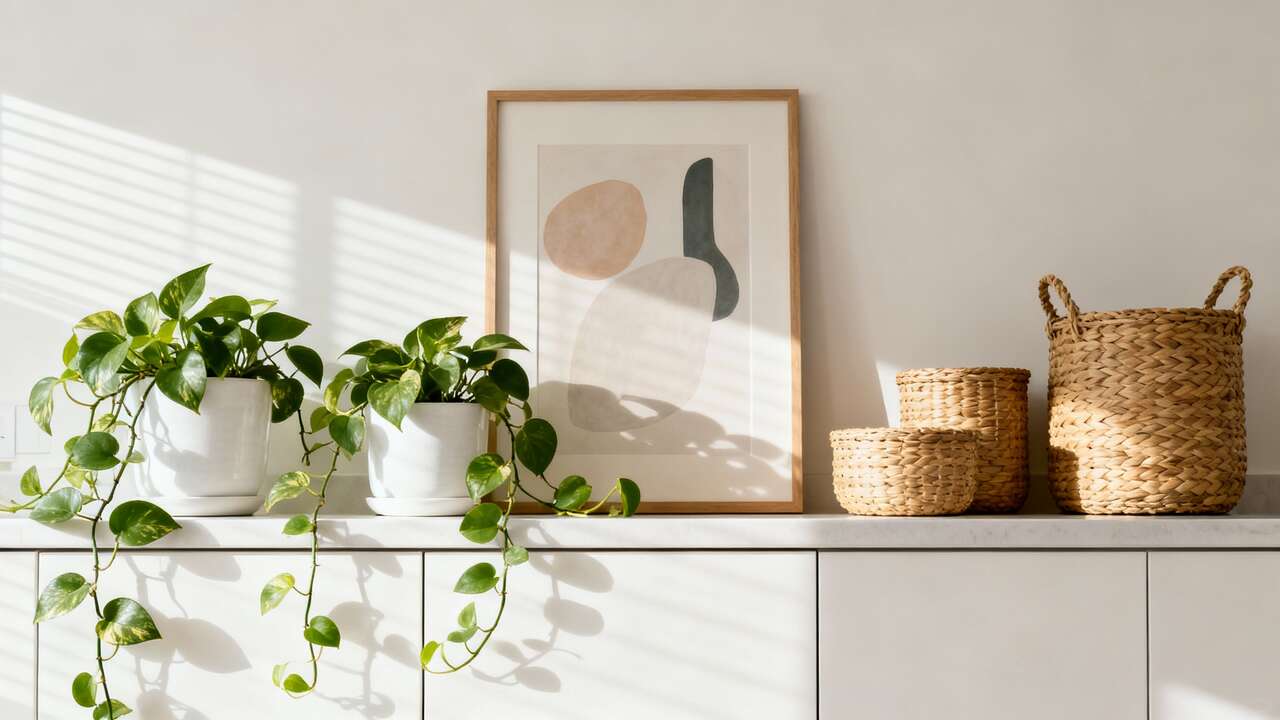

The awkward, empty space between the top of your kitchen cabinets and the ceiling is a design conundrum faced by many homeowners. Too often, this area becomes a dusty, forgotten void or a graveyard for clutter. Yet, with a little creativity, it can be transformed into a stylish and functional feature that enhances the entire room. This valuable vertical real estate offers a prime opportunity for extra storage, a curated display, or a touch of personality. By rethinking this overlooked zone, you can elevate your kitchen’s aesthetic and make the most of every square inch, turning a problematic gap into a purposeful and attractive asset.
Display artwork
Choosing the right pieces
Transforming the space above your cabinets into a miniature art gallery can inject personality and colour into your kitchen. The key is to select pieces that complement your existing decor without overwhelming the space. Consider the scale: a single, large statement piece can create a dramatic focal point, while a collection of smaller frames can form a charming, curated display. The subject matter should resonate with the heart of the home; think food-related prints, abstract pieces with a complementary colour palette, or even vintage posters. It is essential to maintain a cohesive theme to prevent the display from looking haphazard. Framing is also crucial; using similar or complementary frames will unify the collection and give it a polished, intentional appearance.
Installation and arrangement
Safely and effectively arranging art in this high, and sometimes narrow, space requires some planning. Leaning frames against the wall is a simple, effective method that allows for easy rotation of pieces. If you prefer to hang them, ensure you use appropriate fixings. For a less permanent solution, consider using high-quality adhesive strips designed for pictures. When arranging multiple pieces, lay them out on the floor first to find a composition that feels balanced. A good rule of thumb is to vary the orientation and size of the frames to create a dynamic visual flow. Here are a few tips for a successful arrangement:
- Leave a few inches of space between the top of the cabinet and the bottom of the lowest frame.
- Group smaller pictures together to give them more presence.
- Ensure there is adequate lighting, as this area can often be in shadow.
- Do not overcrowd the space; sometimes, less is more.
Displaying art provides a purely aesthetic function, but this space can also serve a more practical, literary purpose for the avid home cook.
Store cookbooks
Creating a culinary library
For those who cherish their collection of cookbooks, the space above the cabinets presents an ideal location for a culinary library. Storing them here keeps them within reach but clears valuable counter and shelf space elsewhere in the kitchen. This approach is functional yet decorative, turning the colourful spines of your favourite recipe books into an integral part of the kitchen’s design. It celebrates your passion for food and creates a warm, inviting atmosphere that suggests the kitchen is a well-used and well-loved space. Arranging them neatly transforms a simple storage solution into a statement of personal taste.
Organisation tips
A tidy arrangement is essential to prevent the display from looking cluttered. Sturdy, stylish bookends are a must-have to keep the books upright and orderly. You might choose to organise them by the colour of their spines for a visually striking rainbow effect, or group them by size for a more uniform look. A more practical approach is to categorise them by cuisine or author. This not only looks organised but also makes it easier to find the exact book you need. Below is a comparison of different organisational methods.
| Organisation Method | Primary Benefit | Best For |
|---|---|---|
| By Colour | High visual impact and aesthetic appeal. | Design-focused kitchens. |
| By Size | Creates a neat, uniform line. | Minimalist or modern aesthetics. |
| By Cuisine | Maximum practicality and ease of use. | Avid cooks who use their books frequently. |
While an open library of books adds character, some items are better kept out of sight, requiring a more discreet storage solution.
Add baskets to hide clutter
Selecting the right baskets
Baskets offer one of the most effective ways to combine storage and style, neatly concealing clutter while adding texture and warmth to your kitchen. The material you choose can significantly influence the room’s overall feel. Wicker or rattan baskets lend a natural, rustic, or coastal charm, softening the hard lines of the cabinetry. For a more modern or industrial look, wire or metal baskets are an excellent choice, offering a glimpse of the contents while maintaining a clean, organised appearance. Fabric-lined baskets can add a touch of softness and are perfect for protecting more delicate items. Whatever the material, choosing baskets of a uniform style and colour will create a cohesive and deliberate look.
What to store inside
This hidden storage is perfect for items you do not use every day but need to keep accessible. It is an ideal spot for stashing away things that would otherwise clutter your worktops or cupboards. Think about dedicating specific baskets to certain categories to maintain organisation. Some excellent candidates for basket storage include:
- Rarely used small appliances like a waffle maker or ice cream machine.
- Seasonal items such as Christmas cookie cutters or summer picnic supplies.
- Bulk-buy pantry items like paper towels or extra bags of pasta.
- Special occasion dinnerware or glassware.
Moving from concealed items to those you wish to put on full display, the space can also serve as a stage for your most treasured decorative objects.
Showcase vases and sculptures
Curating your display
The area above your cabinets can act as a high-end display shelf for beautiful objects like ceramic vases, glass pieces, or small sculptures. The key to success here is careful curation. Instead of filling the entire length with numerous small items, which can look cluttered, adopt a ‘less is more’ approach. Select a few standout pieces that vary in height, shape, and texture to create visual interest. Grouping items in odd numbers, such as three or five, is a classic design trick that creates a more dynamic and balanced composition. Ensure the objects are large enough to be appreciated from the ground, as small, intricate pieces will lose their impact from a distance.
Maintaining the look
A display of this nature requires a commitment to cleanliness. As this area is prone to dust and grease, regular cleaning is essential to keep your treasured items looking their best. A long-handled duster will make this task easier. It is also important to resist the urge to add more items over time. Keep the display intentional and edited. This space should highlight a few special objects, not become a repository for every decorative item you own. A well-curated, clean display will draw the eye upwards and add a touch of sophistication to your kitchen.
While inanimate objects add elegance, introducing living elements can bring a completely different kind of energy and vitality to the space.
Let indoor plants thrive
Choosing suitable plants
Bringing greenery into the kitchen is a wonderful way to add life, colour, and a touch of nature. The space above cabinets can be an excellent home for indoor plants, creating a lush, elevated garden. Trailing plants, such as Golden Pothos or String of Pearls, are particularly effective as they will cascade beautifully down the side of the cabinets. It is crucial to choose plants that can tolerate the specific conditions of that spot. Kitchens can be warm and humid, but the area near the ceiling might not receive a great deal of direct sunlight. Therefore, low-light tolerant and hardy varieties are often the best choice.
Care and consideration
The main challenge of keeping plants in this location is accessibility for watering. To make this easier, choose lightweight pots and place a protective saucer or tray underneath each one to prevent water from damaging your cabinets. A watering can with a long spout will be an invaluable tool. It is also wise to select plants that are relatively low-maintenance and can tolerate a bit of neglect. Below is a list of suitable plants for this elevated position.
| Plant Name | Light Requirement | Watering Needs |
|---|---|---|
| Snake Plant (Sansevieria) | Low to bright, indirect light | Drought-tolerant; allow soil to dry out. |
| ZZ Plant (Zamioculcas zamiifolia) | Low to bright, indirect light | Very low; water infrequently. |
| Golden Pothos (Epipremnum aureum) | Low to bright, indirect light | Moderate; water when top inch of soil is dry. |
Just as living plants can add an organic, decorative touch, so too can the very staples of the kitchen when displayed thoughtfully.
Use food storage boxes
Aesthetic and practical storage
Decanting dry goods into uniform storage containers and displaying them above the cabinets is a solution that is both beautiful and highly practical. This approach, popularised in recent trends focusing on vertical space, turns everyday pantry staples like flour, sugar, pasta, and grains into a stylish, organised display. Choose clear glass or high-quality plastic jars so you can easily see the contents. The repetition of matching containers creates a clean, cohesive look that is far more appealing than a jumble of mismatched commercial packaging. This method not only frees up valuable cupboard space but also allows you to see at a glance when you are running low on an essential item.
Labelling for efficiency
While uniform jars are aesthetically pleasing, clear labelling is essential for functionality. You do not want to mistake salt for sugar in a morning coffee. Consistency in your labelling system is key to achieving a polished look. You can opt for simple, minimalist printed labels, rustic-looking chalkboard stickers that can be updated as needed, or even use an embossing label maker for a retro feel. Place the labels consistently on each jar, either centred on the front or on the lid, depending on which is more visible from below. This final detail completes the look, creating an organised pantry display that is both a design feature and a model of efficiency.
By implementing these ideas, from artistic displays and culinary libraries to verdant greenery and organised pantries, the forgotten space above your cabinets can be reclaimed. It can be transformed from an empty void into a feature that adds personality, style, and much-needed functionality to the heart of your home, reflecting your personal taste while maximising every available inch.

- “Trees Adjacent to Fault Lines Reveal Low-Frequency Vibrations Ahead of Seismic Events” - 20 November 2025
- I’ve Recommended It to My Patients for Years”: The Right Way to Wash Your Hair With Vinegar, According to a Dermatologist - 20 November 2025
- Earth’s Seasons Are Out of Sync, Scientists Discover from Space - 20 November 2025
Related publications:
 It Weighed More Than 2 Tonnes and Holds the Record for the Largest Bird Nest in the World Ever Documented by Scientists
 The Trick That Horticulturists Keep to Themselves to Make a Wilted Orchid Bloom Again
 How to Remove Limescale From Your Shower Head Without Vinegar, Scrubbing or Expensive Products
 Chefs’ Trick to Cook a Baked Potato in Under 10 Minutes Without an Oven or Stovetop
 These Are 6 Products You Don’t Want To Miss From The New M&S X Tom Kerridge Cookware Collection.
 How to Save Money on Heating by Bleeding Radiators Correctly
 Honda Gold Wing 2025 Official Reveal Proudly Showcases Its Legendary Touring Heritage With Revolutionary Powertrain and Luxurious Comfort Options
 How to Iron Clothes Faster Using a Spray Bottle and a Secret Ingredient